How to Style a Small Balcony with Bunting and Garden Flags
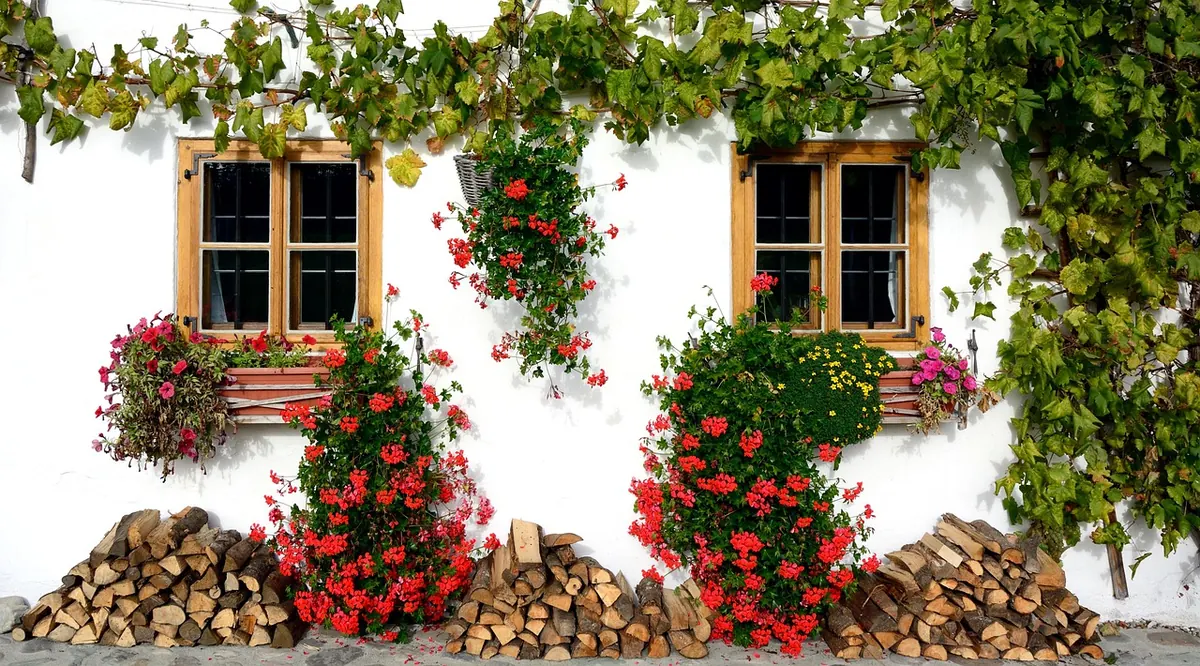
A balcony of two square metres can still feel like a garden. The trick is not to fill it, but to choose a few strong lines — a sweep of bunting along the railing, a pair of garden flags at the corners, a banner running down the wall — and let the eye follow them. Bunting and flags suit tight spaces because they are light, easy to swap with the season, and take up no floor at all. Placed well, they read as deliberate design rather than leftovers from a party.
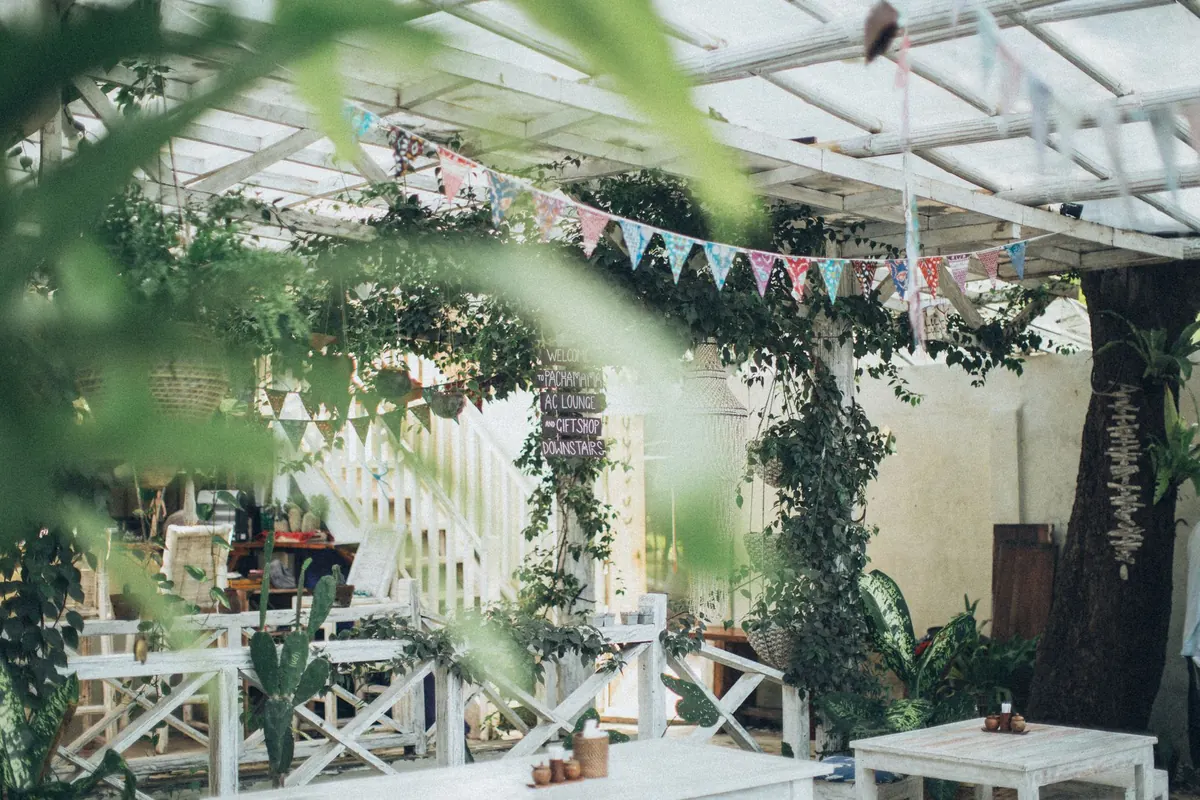
On most small balconies the railing is the longest uninterrupted line you own, so start there. Run the bunting along the outer face rather than the inner one. It looks fuller from inside, catches the light, and keeps the fabric away from chairs, planters and elbows.
Fasten it every 60 to 90 cm with zip ties, reusable velcro straps or small bungee loops. Adhesive hooks are tempting, but outdoor temperature swings and damp surfaces make them unreliable; save them for indoor walls. Let the strand dip into soft swags, roughly a third of the railing's height. On an exposed, windy balcony, tighten those dips to about 15 cm and add an extra tie in the middle — a shallow, well-anchored swag holds its shape, while a deep one turns into a flag in a gale.
One safety note worth repeating: never run fabric across a fire escape, a gate, or any path you would need in an emergency, and check your lease or building rules before drilling or tying anything to shared structures.
Once the railing is done, look at the vertical surfaces behind you. A single banner of bunting hung vertically beside the door is a strong vertical accent, and it costs you nothing in floor space. Horizontal strands look best on a blank wall at eye level, about 1.7 to 1.9 m from the deck.
Windows are useful too, especially on enclosed balconies. A tension rod inside the window recess holds a short length of bunting without any drilling, and it can be removed in seconds when you want the view back. Suction cups work on smooth glass for light flags, but they tend to let go in cold snaps, so check them after the first frost. If you cannot drill at all, over-door hooks, magnetic hooks on steel door frames and clip-on rings for existing railings will cover most situations.
Compact balconies have more vertical room than anyone remembers. Two approaches cover almost every layout.
A slim shepherd's hook pushed into a large planter gives you a flag height of 1.2 to 1.5 m without touching the building. Two of them, one at each front corner, frame the space and make the balcony feel wider than it is. Choose a hook with a base plate wide enough that wind cannot tip the pot.
A stainless wire or a sturdy cord stretched between two walls or posts, roughly 2.1 m up so nobody walks into it, lets you hang a light strand of bunting across the diagonal. This is the single most effective trick for small balconies: the overhead line draws the eye upward and makes a narrow space feel taller. Keep the fabric light, and use a turnbuckle or a taut-line hitch so the swags stay level in breeze.
Clutter is the main risk in small spaces, and colour is where clutter starts. Pick two or three colours and stop. If your balcony is already busy with pots, keep the bunting neutral — natural canvas, off-white, faded grey — and let two bright flags carry the accent. If the space is sparse, go the other way: one confident colour in the bunting, repeated in a cushion, a watering can or a group of matching pots.
Colour echoing matters more than colour matching. A terracotta flag beside a terracotta pot looks intentional; the same flag beside a bright blue pot looks like an accident. Group plants in threes and let the fabric repeat one tone from the group.
Outdoor fabric lives hard. Polyester and solution-dyed acrylic hold colour best; untreated cotton fades fast and can mildew if it stays damp through a wet week. Whatever you choose, take it down before a named storm, and bring the whole set indoors for the coldest weeks if you get hard frosts.
When you swap seasons, wash by hand in cool water, dry completely, and store flat or loosely rolled rather than folded, so crease lines do not become permanent. A small labelled bin keeps a spring set, a summer set and a winter set from turning into a tangle in the storage cupboard.
Hang everything in one go, then leave it for a day before you decide. Look at it from the doorway, from the far end of the room, and from outside if you can. Almost every first attempt has one element too many — a third flag, an extra strand, a colour that fights the pots. Take that one thing down. The remaining pieces will look better for it.
Finally, keep the setup easy to adjust. Zip ties and velcro cost little, so re-tie rather than live with a sagging swag, and keep a short length of spare bunting in a drawer for the week you want a change. Small balconies reward small, repeatable adjustments far more than one big installation.
Photo: Antranias / Pixabay
Previous Post
Rental Garden Decor Checklist: No Holes, No Damage, No Deposit Lost
Next Post
Wind, Rain, and Sun: How to Protect Outdoor Garden Decor Year-Round